Three parts · 46 diagrams · Not medical advice
Newborns, Decoded
The baby arrives; the documentation does not.
What follows is a humorous field guide to the beautifully chaotic first months, assembled by someone who tried to reverse-engineer a newborn at 3 a.m. — and mostly failed, cheerfully. It renders those first weeks as the engineering system they secretly are: inputs, decisions, loops, and the occasional stress test.
You are not failing. You are debugging.
The series
Each part stands alone and runs one phase of the first months end to end.
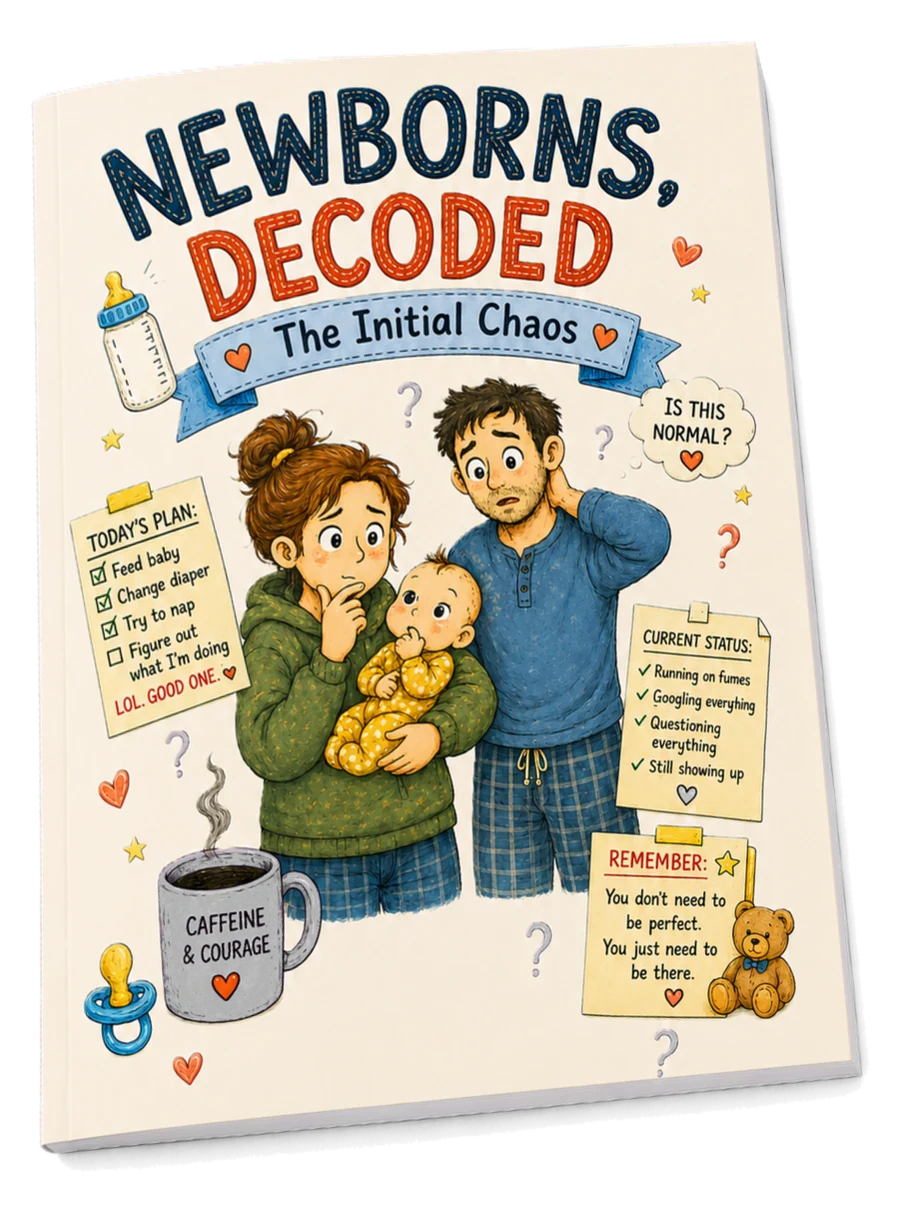
The Initial Chaos
An overengineered survival manual for new parents — Part I of III

Settling Into the Rhythm
An overengineered survival manual for new parents — Part II of III
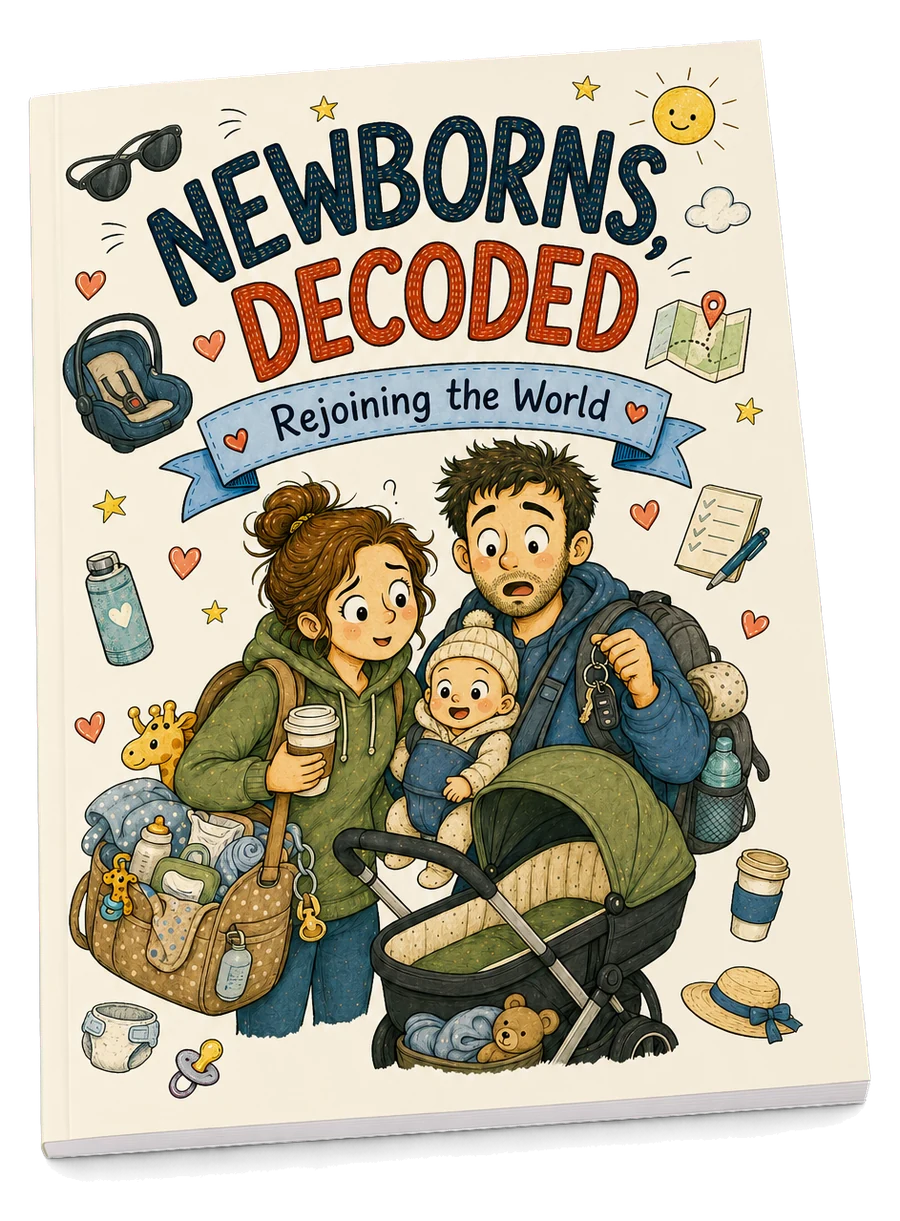
Rejoining the World
An overengineered survival manual for new parents — Part III of III

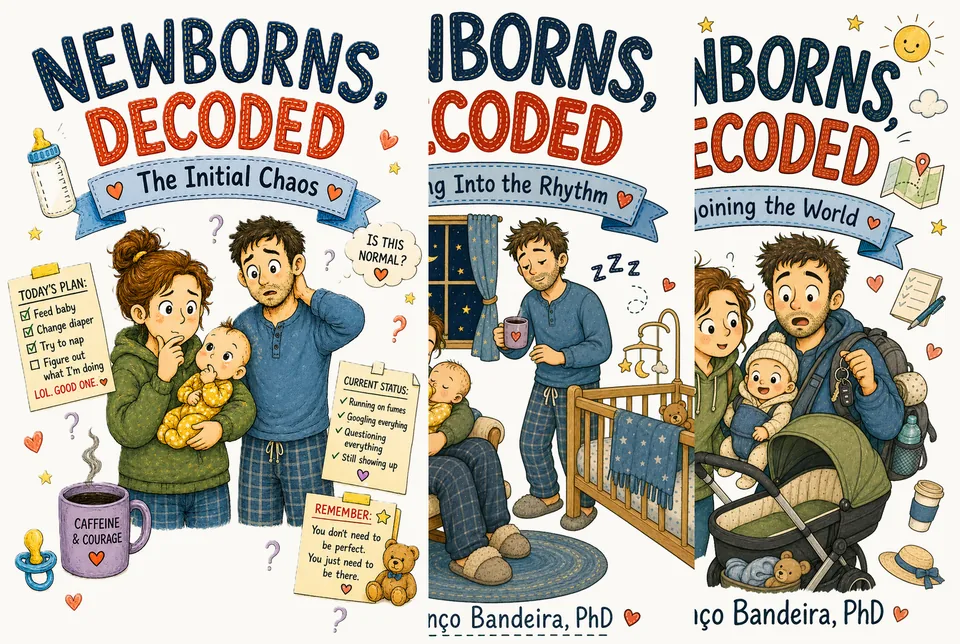
Complete set
All three parts — $20.00$23.97
All three parts — the whole first year, documented. Save 17% against buying them separately. →
How to use this book
No one hands you a manual for this. The baby arrives; the documentation does not.
What follows is a humorous field guide to the beautifully chaotic first months, assembled by someone who tried to reverse-engineer a newborn at 3 a.m. — and mostly failed, cheerfully. It renders those first weeks as the engineering system they secretly are: inputs, decisions, loops, and the occasional stress test.
Use the diagrams when your tired brain needs a next step, a laugh, or a reminder that newborn care is rarely linear. Read it out of order; skip what doesn't apply.
About the author
Lourenço Bandeira, PhD, is a data scientist and researcher with a background in artificial intelligence, pattern recognition, image analysis, and planetary science (not that kind of doctor — his patients are algorithms).
Then he became a father, and discovered that newborns are, in many ways, the most advanced and least documented system he had ever encountered: noisy, beautiful, unpredictable, frequently hungry, resistant to debugging.
He lives in Portugal with his family, where he continues to study complex systems — some involving artificial intelligence, and one involving a small child with strong opinions.